人才详细信息
简介
个人简介:
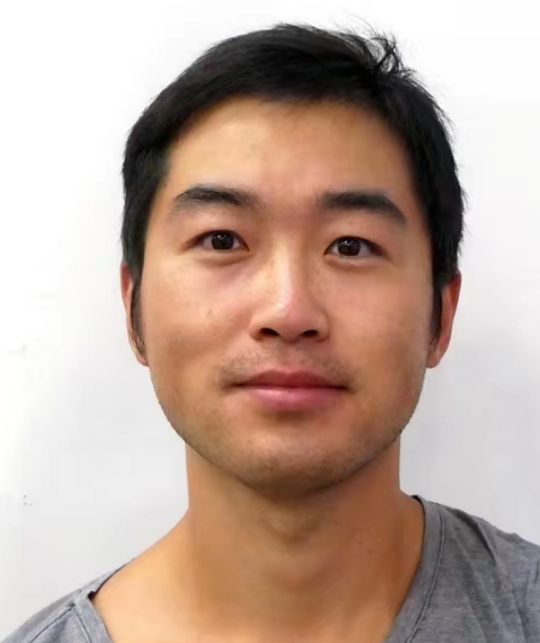
张臻,博士,中国科学院青藏高原研究所研究员,长期从事全球甲烷收支及其相关的观测、机理和模拟研究。目前共发表SCI论文100余篇,其中第一作者及通讯作者论文发表在Nature Climate Change、Nature Geoscience、PNAS、National Science Review、Science Bulletin、Earth System Science Data等期刊,多篇论文入选ESI高引用文章,研究成果被IPCC第六次评估报告、美国国家第二次气候变化评估报告等多篇国际权威报告引用,并作为代表性成果亮相联合国气候大会COP28。目前主要参与全球碳计划(Global Carbon Project)甲烷项目,负责多个陆地生态系统模型集合模拟实验的组织与协调工作;同时主持全球湿地甲烷模型集合交叉验证研究,并参与全球甲烷排放通量观测数据集的构建。同时协调青藏高原区域地球系统模型二阶段的研发工作,围绕高原大气、冰冻圈、水文、生态系统与碳循环等关键过程,推动多圈层过程耦合、模型系统集成及高分辨率模拟。
教育背景:
2009-2013 博士,南京大学地理学专业
2006-2009 硕士,南京农业大学地理信息系统专业
2002-2006 学士,南京气象学院地理信息系统专业
学术任职经历:
2023-至今 中国科学院青藏高原研究所 研究员
2017-至今 瑞士联邦森林雪景观生态研究所(WSL) 客座研究员
2021-2022 美国马里兰大学地球系统科学交叉学科中心 研究助理教授
2017-2022 美国宇航局戈达德太空飞行中心 客座研究员
2017-2020 美国马里兰大学地理系 博士后
2014-2018 美国蒙大拿大学生态系 客座助理教授
2014-2017 瑞士联邦森林雪景观生态研究所 博士后
2013-2014 中国科学院寒区旱区环境与工程研究所 助理研究员
研究方向
陆面过程模型,全球动态植被模型,生物地球化学循环建模,地球系统模型,全球甲烷循环,多源数据融合,湿地遥感。
职务
社会任职
承担项目
获奖及荣誉
代表论著
出版和发表:
Google Scholar:总被引12,649次,H-index 44,i10-index 88(截至2026年7月14日)。
部分发表论文及著作:
1. Zhang Zhen*, Poulter B., Wang Z., Bruhwiler L., et al., 2026. Emergent constraints on future methane emissions from global wetlands. Nature Geoscience, 19: 654-659. DOI: 10.1038/s41561-026-01987-2.
2. Zhao P., Zhang Zhen*, Huang G., Wang Z., Canadell J. G., et al., 2026. Two decades of methane budgets at the sub-national scale in China. Science Bulletin, in press. DOI: 10.1016/j.scib.2026.06.019.
3. Chen W., Zhang Y., Zou Y., Zhang Zhen, 2026. Climate feedback of forest fires amplified by atmospheric chemistry. Nature Geoscience, 19(4): 402-405. DOI: 10.1038/s41561-026-01926-1.
4. Li F., Zhu Q., Yuan K., ... Zhang Zhen, ... Jackson R. B., 2026. The underappreciated importance of small wetlands in global methane emissions. Nature Climate Change, 16: 535-539. DOI: 10.1038/s41558-026-02609-w.
5. Ma S., Creed I. F., Badiou P., Bansal S., Zhang Zhen, 2026. Temperate wetlands lose climate-cooling capacity under warming. Nature Communications, online published 25 June 2026. DOI: 10.1038/s41467-026-74772-9.
6. Zhang Zhen*, Poulter B., Melton J. R., Riley W. J., et al., 2025. Ensemble estimates of global wetland methane emissions over 2000-2020. Biogeosciences, 22(1): 305-321. DOI: 10.5194/bg-22-305-2025.
7. Ying Q., Poulter B., Watts J. D., ... Ueyama M., Zhang Zhen*, 2025. WetCH4: a machine-learning-based upscaling of methane fluxes of northern wetlands during 2016-2022. Earth System Science Data, 17(6): 2507-2534. DOI: 10.5194/essd-17-2507-2025.
8. Ury E. A., Zhang Zhen, Buma B., 2025. Addressing methane emission feedbacks from global wetlands. Nature Sustainability, 8(10): 1115-1118. DOI: 10.1038/s41893-025-01625-6.
9. Kuhn M., Olefeldt D., Arndt K. A., ... Zhang Zhen, 2025. Current and future methane emissions from boreal-Arctic wetlands and lakes. Nature Climate Change, 15(9): 986-991. DOI: 10.1038/s41558-025-02413-y.
10. Shen L., Peng S., Zhang Zhen, et al., 2025. The large role of declining atmospheric sulfate deposition and rising CO2 concentrations in stimulating future wetland CH4 emissions. Science Advances, 11: eadn1056. DOI: 10.1126/sciadv.adn1056.
11. Mu C., Lei P., Mu M., ... Zhang Zhen, 2025. Methane emissions from thermokarst lakes must emphasize the ice-melting impact on the Tibetan Plateau. Nature Communications, 16: 2404. DOI: 10.1038/s41467-025-57745-2.
12. Liu J., Sleeter B. M., Zhu Z., ... Zhang Zhen, et al., 2025. Land change, fire, and climate weaken carbon sink in the conterminous United States. Science Advances, 11: eadx7823. DOI: 10.1126/sciadv.adx7823.
13. Lin X., Peng S., Ciais P., ... Zhang Zhen, et al., 2024. Recent methane surges reveal heightened emissions from tropical inundated areas. Nature Communications, 15: 10894. DOI: 10.1038/s41467-024-55266-y.
14. Zhang Zhen*, Poulter B., Feldman A. F., Ying Q., Ciais P., Peng S., Li X., 2023. Recent intensification of wetland methane feedback. Nature Climate Change, 13(5): 430-433. DOI: 10.1038/s41558-023-01629-0.
15. Zhang Zhen*, Bansal S., Chang K.-Y., Fluet-Chouinard E., et al., 2023. Characterizing performance of freshwater wetland methane models across time scales at FLUXNET-CH4 sites using wavelet analyses. Journal of Geophysical Research: Biogeosciences, 128(11): e2022JG007259. DOI: 10.1029/2022JG007259.
16. Fluet-Chouinard E., Stocker B. D., Zhang Zhen, Malhotra A., et al., 2023. Extensive global wetland loss over the past three centuries. Nature, 614(7947): 281-286. DOI: 10.1038/s41586-022-05572-6.
17. Bansal S., Post van der Burg M., Fern R. R., ... Zhang Zhen, et al., 2023. Large increases in methane emissions expected from North America's largest wetland complex. Science Advances, 9(9): eade1112. DOI: 10.1126/sciadv.ade1112.
18. Zhang Zhen*, Poulter B., Knox S., Stavert A., et al., 2022. Anthropogenic emission is the main contributor to the rise of atmospheric methane during 1993-2017. National Science Review, 9(5): nwab200. DOI: 10.1093/nsr/nwab200.
19. Peng S., Lin X., Thompson R. L., ... Zhang Zhen, et al., 2022. Wetland emission and atmospheric sink changes explain methane growth in 2020. Nature, 612(7940): 477-482. DOI: 10.1038/s41586-022-05447-w.
20. Zhang Zhen*, Fluet-Chouinard E., Jensen K., McDonald K., et al., 2021. Development of the global dataset of Wetland Area and Dynamics for Methane Modeling (WAD2M). Earth System Science Data, 13(5): 2001-2023. DOI: 10.5194/essd-13-2001-2021.
21. Weir B., Crisp D., O'Dell C. W., ... Zhang Zhen, et al., 2021. Regional impacts of COVID-19 on carbon dioxide detected worldwide from space. Science Advances, 7(45): eabf9415. DOI: 10.1126/sciadv.abf9415.
22. Natali S. M., Watts J. D., Rogers B. M., ... Zhang Zhen, et al., 2019. Large loss of CO2 in winter observed across the northern permafrost region. Nature Climate Change, 9: 852-857. DOI: 10.1038/s41558-019-0592-8.
23. Zhang Zhen*, Zimmermann N. E., Calle L., Hurtt G., Chatterjee A., Poulter B., 2018. Enhanced response of global wetland methane emissions to the 2015-2016 El Niño-Southern Oscillation event. Environmental Research Letters, 13(7): 074009. DOI: 10.1088/1748-9326/aac939.
24. Zhang Zhen*, Zimmermann N. E., Stenke A., Li X., Hodson E. L., Zhu G., Huang C., Poulter B., 2017. Emerging role of wetland methane emissions in driving 21st century climate change. Proceedings of the National Academy of Sciences, 114(36): 9647-9652. DOI: 10.1073/pnas.1618765114.